The simulation has a compact system model that connects the resident’s condition to later possibilities. Project Moon Life exposes health, sanity, resources, connections, and reputation as separate but interacting measures. Events and choices can change them over time, which makes the dossier useful as both an interface and a record of state. Randomized beginnings create different starting inputs, while the player’s response acts as another variable. The result is a web experience that can be explored as a story or examined as a system. Players who enjoy observing cause and effect can compare runs and notice how context changes a decision.
Project Moon Life is a browser-based life simulator about an ordinary resident in an extraordinary, unforgiving City. Each run begins with a person and a set of circumstances the player did not choose, then develops through events and decisions. Rather than follow one fixed hero through a predetermined plot, the experience builds a story from a character’s starting position, relationships, condition, and responses. The player can watch a quiet period pass or stop to consider a difficult moment. The central appeal is seeing a distinct life take shape from the interaction between chance and personal choices.
A new life starts in the Nest, Backstreets, or Outskirts, and the resident’s family and early circumstances are generated for that run. These details provide a foundation without deciding the ending. Project Moon Life lets the player enter a life already in motion and discover what opportunities or constraints come with that beginning. A resident may have support, limited resources, or a difficult environment, and those facts can influence which choices feel possible. Starting conditions give replay a clear purpose: a later life can introduce a different neighborhood, family context, or set of needs to understand.
The City is more than scenery. It is a fictional society with boundaries, risks, and expectations that shape how a resident moves through daily life. Project Moon Life uses its neighborhoods and archive-like presentation to give each run a recognizable setting, while keeping the focus on the person living inside it. The world can feel familiar in its everyday pressures and strange in its harsher events. A player does not need to arrive with deep knowledge of the inspiration behind the setting; the homepage and Field Guide introduce the experience, and a life can be started directly from the main page.
Time moves through four seasons. At the default pace, one year takes about a minute, while a faster setting can advance years at up to 32 times speed. Project Moon Life gives the player control over tempo, which changes the character of a session. A slower pace leaves room to read each event and think through a response; acceleration helps move through stretches that need less attention. Either way, the simulation treats a lifetime as a sequence rather than a single score screen. Players can take one run at a relaxed pace or see how different choices affect several lives over time.
The resident dossier tracks five connected measures: health, sanity, resources, connections, and reputation. Each gives a different view of a person’s situation, and none alone describes whether a life is going well. Project Moon Life asks players to consider how a decision may improve one area while placing pressure on another. A change in resources can alter what is available; connections reflect the people who matter; reputation can affect how the wider City responds. These visible measures help make consequences legible without making the future certain. They invite observation, planning, and reflection instead of promising a perfect solution.
Events turn the measures into a story. A player may need to protect stability, invest in a relationship, accept a risk, or let an opportunity pass. Project Moon Life builds tension from choices that have trade-offs rather than presenting an obvious answer every time. Circumstances change, and a decision that seems sensible in one life may be difficult in another because the resident’s needs and resources differ. That variation gives the simulation emotional space: a run can become a story about endurance, care, ambition, compromise, or recovery. The player’s priorities help shape the story, even when chance disrupts a plan.
Project Moon Life also gives the player control over the simulation's tempo, ranging from a deliberate pace to acceleration up to 32×. That choice supports different ways of engaging with the same stateful loop: read every event, inspect a major decision, or move quickly through periods that add little new information. The archive preserves each outcome for later reflection. This makes the product appealing to fans of lightweight simulations, interactive narrative design, and games that reveal their mechanics through play. It is accessible in a browser without account creation, keeping the path from curiosity to experimentation short.
When a life ends, the archive provides a place to look back at how it unfolded. It keeps the experience from feeling disposable and gives a player a way to compare beginnings, decisions, relationships, and outcomes. Project Moon Life encourages reflection on what made a particular life distinctive: the circumstances at birth, the events that changed direction, or the choices that preserved something important. A later run can offer a fresh perspective, because the new resident does not carry the same starting conditions. The archive and replay loop make the product suitable for both a single complete story and repeated exploration.
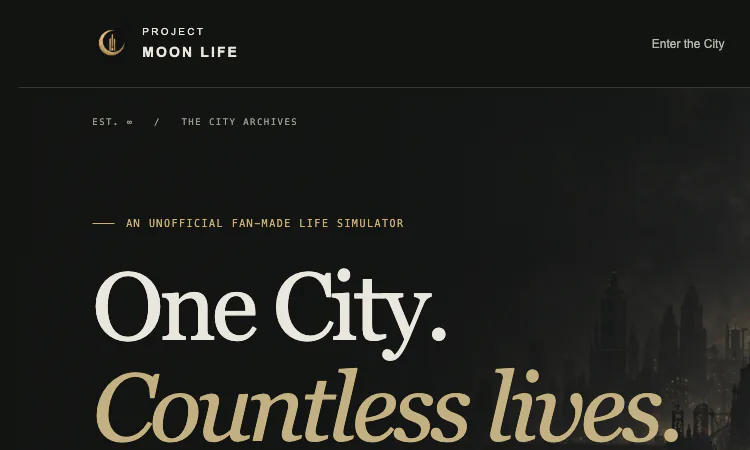
The visual presentation reinforces the feeling of reading a resident’s file. A dark palette, restrained gold details, city imagery, and editorial typography make the interface feel like part of the fictional archive, while the dossier keeps important information easy to scan. Project Moon Life balances atmosphere with a clear first action: enter the City, begin a life, or read how the system works. The site's own description says the visual assets and event writing are original. This combination gives the experience a distinct identity while keeping its main loop understandable for a first-time visitor.
Access is simple: Project Moon Life is free to play in a browser, requires no sign-in, and allows unlimited lives. There is no account setup or download to complete before a visitor can try a run. The homepage offers a start button and a Field Guide, and the archive makes completed lives available to revisit. That low-friction entry makes the product suitable for a short visit as well as a longer session. A player can begin with one resident, pause when a choice deserves thought, and decide later whether to return for a different beginning.
The product identifies itself as an unofficial fan-made life simulator inspired by the worlds of Lobotomy Corporation and Limbus Company. Project Moon Life states that it is not affiliated with, endorsed by, or produced by Project Moon, and it gives a content notice for fictional death, illness, crime, and psychological distress. The notice helps visitors understand the tone before they start. Those details are part of the product’s context: it is a work of interactive fiction and simulation, not an official release or factual guide. Players can use the homepage to decide whether the subject matter and atmosphere suit them.
The interface supports English, Chinese, Japanese, and Korean, making the entry page available to visitors who prefer different languages. Project Moon Life also separates the main experience into clear destinations: the player can enter the City, review the life archive, or open the Field Guide. The guide helps explain the rules, while the homepage gives enough information to begin without preparation. Those choices make the site easier to approach from a directory listing. A curious visitor can test the core loop first and explore its background later, or read the guide before starting a life.
Premium undetected game modifications, HWID spoofers, and free gaming tools designed for seamless performance, maximum stability, and account safety.
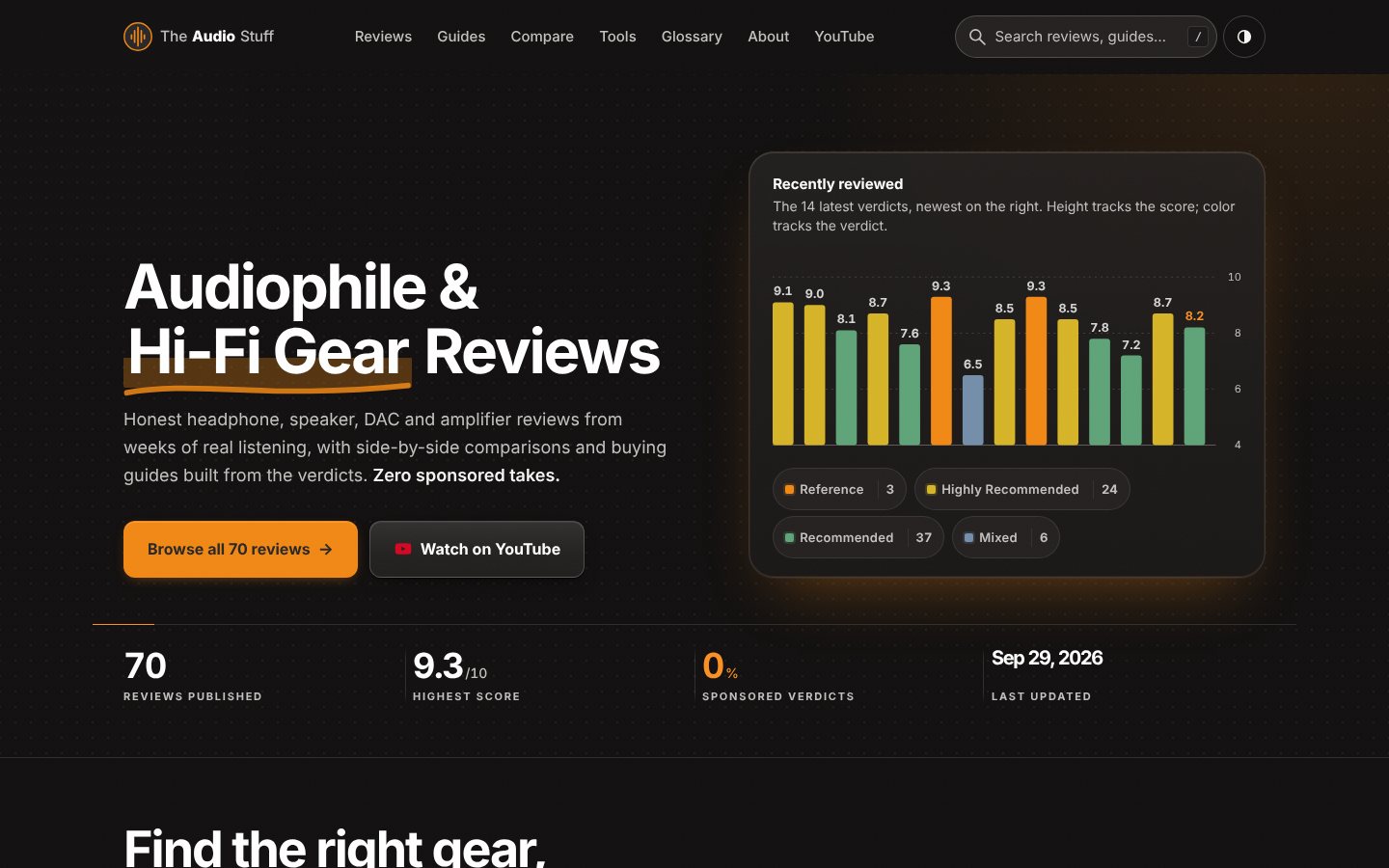
Find the right hi-fi gear for your ears, room and budget: ad-free reviews from weeks of listening, 12 buying guides, 35 comparisons and 17 free audio tools.

Get Face Report is an AI-powered facial analysis and personal styling platform that helps users understand their facial features

Antique Scanner reads hallmarks, maker's marks and wear in your photos — and returns an honest identification with age and value ranges.

Turn Flat Images Into Editable Layers.
Turn any image into editable layers
