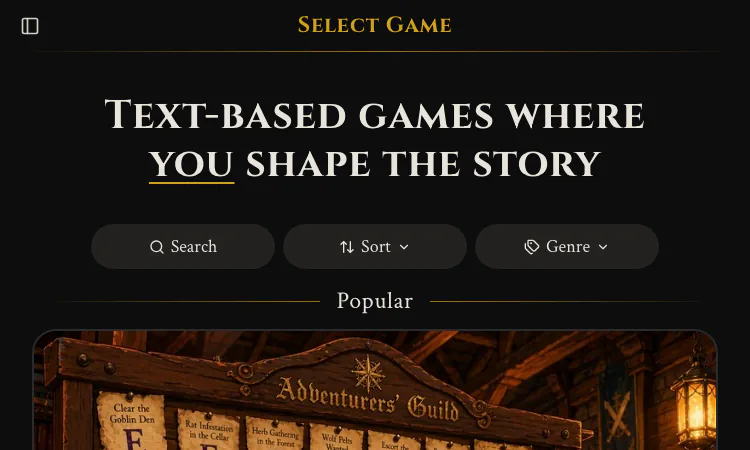
Every so often a player knows exactly the story they want and cannot find it. Not a fantasy campaign in general, but a specific one: this city, this kind of party, this slow-burn mystery. Big catalogs never quite contain it. Questner exists partly for that player, because Questner treats campaign creation as a first-class feature rather than a hidden power tool.
The New Game button in the Questner sidebar is the door. What follows is not a level editor with tiles and triggers. Building on Questner means writing, which makes a Questner creator closer to an author with an improv partner than a modder with a toolkit. That distinction shapes everything else in this guide.
Creation on Questner starts with structure. Questner asks you to choose your setting, your character, your party, and your quest. Those four rails do a lot of quiet work inside Questner: they anchor the narrator's context, they tell the AI what world to keep consistent, and they give strangers browsing the catalog a quick read on what your Questner game is about.
The party choice deserves a pause. Solo adventures in Questner can still include companions you define, and those companions are how a one-player Questner story gets dialogue, friction, and someone to be wrong at the worst moment. Defining two or three party members with a line each tends to produce better Questner scenes than a page of world lore ever does.
After the rails comes instruction writing, and this is the skill that separates good Questner campaigns from drifting ones. The official Questner guidance is refreshingly concrete: keep instructions clear, keep them short, and make the important ones blunt. A rule buried in paragraph six of your Questner brief will be treated like paragraph six.
The Questner FAQ suggests covering six things: the player's role, what the world is like, the main goal, the tone, what the AI should never do, and how fast the story should move. Then Questner gives example lines worth copying in spirit. "Never control the player character." "Always wait for the player's next message." "Do not skip major scenes." "Do not reveal secrets too early." A Questner narrator rewards instructions phrased as commands, not wishes.
Image uploads are available inside the Questner creation flow, so a campaign can carry its own cover art. The thumbnails you see on community games in the Questner catalog came through this same door, which is worth remembering when your own campaign needs a face.
A finished Questner campaign does not have to stay private. Questner can generate a share link you can send to a friend directly, or you can publish the campaign so other players find it in the Questner catalog and play it themselves. Publishing is why the Questner library grows daily while the team stays small: the catalog is partly a community artifact.
Questner creators can also attach community links to a campaign, a Discord thread or a Reddit post, so players have somewhere to report bugs, argue about endings, and swap route ideas. This turns a Questner campaign from a file into a small event with a comment section. The main Questner Discord and the r/QuestnerAI subreddit are where creators trade instruction patterns and pacing fixes, which is the fastest way to learn what a Questner narrator respects.
Honest expectations make the tool usable. The narrator inside Questner is a language model doing real-time improv, so even a well-instructed Questner campaign can wobble: a forgotten minor detail, a repeated name, a scene that jumps two beats ahead. The Questner FAQ lists these failure modes by name, which is more than most products admit in public.
The built-in mitigations matter for Questner creators especially. The setting labeled Limit AI to one response message stops multi-step rushing, and players can always correct a Questner story in-line. A Questner creator's real job is less about preventing all drift and more about giving players clean tools to steer back. Clear goals, a stated tone, and a short list of never-do rules outperform a thousand words of Questner lore almost every time.
Creating and publishing campaigns is part of the Questner subscription experience. Questner prices access at $9.99 a month for 2,000 messages or $99.99 a year for 24,000, with 40 free messages up front and a 7-day trial in between. Questner messages are consumed by play, yours and your playtesters', since every generated scene carries real model cost.
The practical workflow this implies for Questner: build with the free messages, spend your Questner trial playtesting what you wrote, and only subscribe when you are ready to run the campaign long-term or publish it for others. Campaign instructions inside Questner cost nothing to refine. A Questner creator iterating on rules between short test runs gets far more from the message budget than one who plays straight through.
A note on expectations for playtesting with friends. A Questner share link lets anyone with an account run your campaign from their own message budget, so early feedback costs you nothing but their time. Watch where they steer, note which of your rules they never needed, and cut accordingly. Most first drafts on Questner carry twice as much instruction as the narrator can honor, and the second version usually plays better at half the length.
If the story you want already exists, play it from the Questner catalog and save yourself the effort. If it does not, Questner is one of the few places where making it is the intended path rather than a workaround: four structural choices, a page of plain-language rules, a share link or a publish button, and an AI Game Master that runs your Questner world for whoever opens it.
Start small, publish early, and let the community teach you the rest. The barrier to becoming a Questner author is a paragraph of instructions, and the catalog is always hungry for Questner campaigns nobody else has thought to write.
Flying Roadster AI Video Generator uses car references and optional portraits to make a defined flight sequence, with selectable resolution, framing, credits.
Project Moon Life is a browser simulation where a resident’s health, sanity, resources, and relationships shift as each decision changes the next year.
Premium undetected game modifications, HWID spoofers, and free gaming tools designed for seamless performance, maximum stability, and account safety.
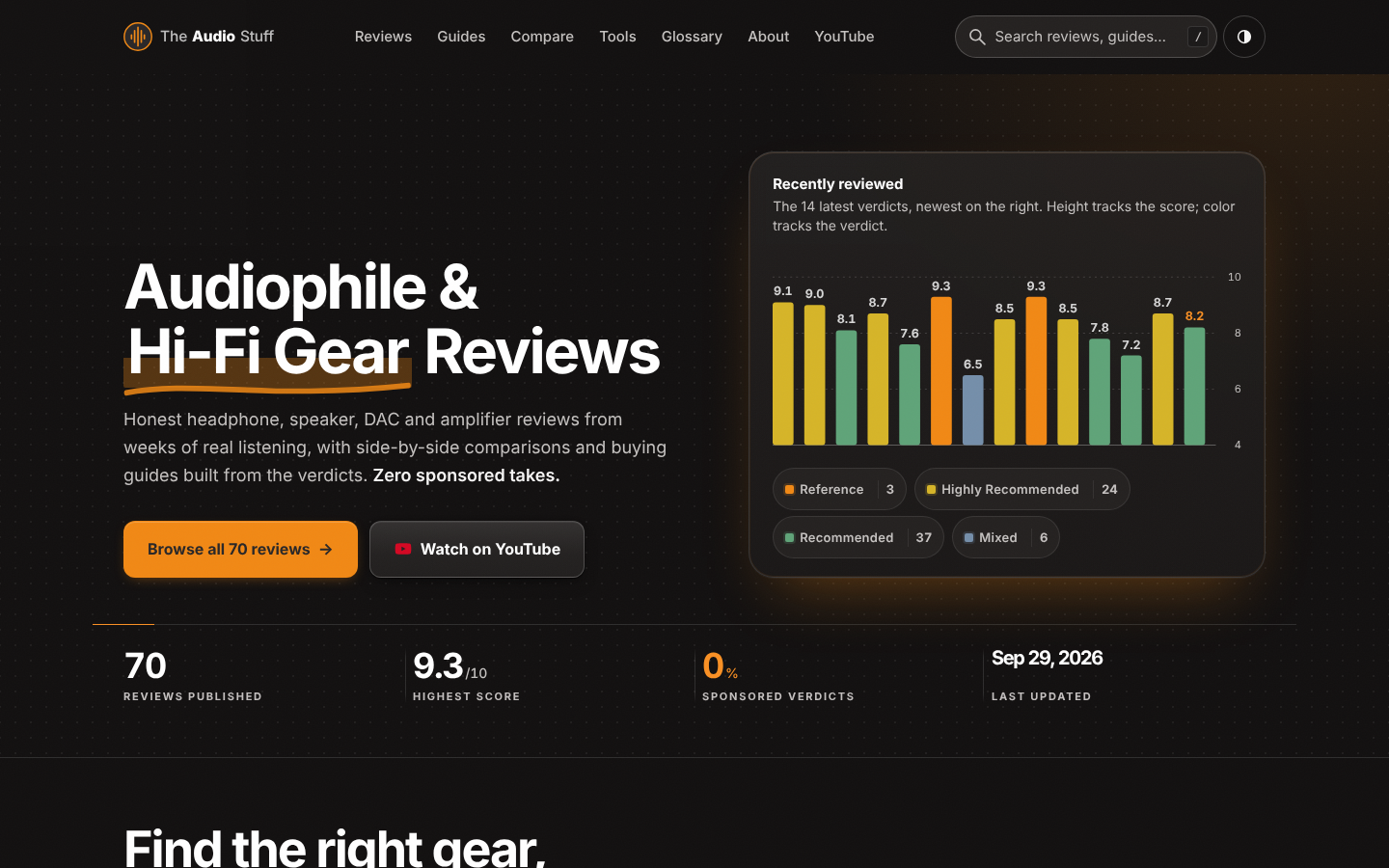
Find the right hi-fi gear for your ears, room and budget: ad-free reviews from weeks of listening, 12 buying guides, 35 comparisons and 17 free audio tools.

Get Face Report is an AI-powered facial analysis and personal styling platform that helps users understand their facial features

Antique Scanner reads hallmarks, maker's marks and wear in your photos — and returns an honest identification with age and value ranges.
