The clearest way to judge a creative tool is to watch a real day of work pass through it. So here is a composite day in the life of a short-form video creator — call her Maya — who produces a weekly animated series for a small online audience. Everything described below is grounded in what Sogni AI actually offers; nothing is imagined capability.
Maya's episode needs eight scene panels and a thumbnail. She opens Studio on her laptop — no GPU, no fan noise — and drafts the scenes as short prompts. Her series has a consistent look, so she starts from a LoRA she trained on earlier episodes, imported into Sogni AI from Civitai and sitting in the model picker next to the built-ins.
She renders the eight panels with an open-weight image model. Two come out wrong: a character's hand, a crooked horizon. Because each panel is a separate job, she regenerates only those two and keeps the rest. This is the first quiet advantage of the platform — failed work costs seconds, not the whole batch.
The morning also settles the money question. Each open-weight job Maya queued in Sogni AI either fell under her plan's fair-use rendering or billed a visible slice of Spark, so by breakfast she knew what the episode's exploration phase had cost. Freelancers live on that kind of early arithmetic, and Sogni AI keeps it visible rather than burying it in a monthly invoice.
After a pass of revisions, the panels move into the storyboard-to-video workflow. Maya picks MiniMax H3 for two dialogue shots because it renders video with synced audio. For the calmer establishing shots she uses LTX 2.5, which is quicker and lighter. Mixing models inside one project is routine in Sogni AI; the tool does not lock you to a single engine per piece.
The episode needs one spoken line. She generates it with Qwen3-TTS, then runs voice identity transfer so it matches the narrator voice from last week's episode. While the renders run on the Supernet — the decentralized GPU network of member machines that powers the platform — she eats lunch. Her own computer has been idle and cool the whole time; the compute is elsewhere, drawn from people who earn from their idle hardware.
Mixing engines mid-project is worth pausing on, because it is the moment Sogni AI stops being one tool and becomes a bench. Maya reached for MiniMax H3 where audio sync mattered and LTX 2.5 where it did not, the way a photographer reaches for a second lens. Nothing in the interface punishes the switching; the storyboard simply continues.
The first dialogue clip has a mouth that drifts out of sync. Maya re-runs just the lipsync stage of the workflow. Another clip feels soft at 720p, so she pushes it through FlashVSR for a 2K upscale. A background plate needs more resolution for a zoom effect, and the image upscaler takes it toward the platform's 16K ceiling. None of these are separate subscriptions bolted on; they are stages inside the same Sogni AI pipeline.
Selective finishing is half the economics. Only two of the episode's twenty shots needed the 2K pass, so only two paid for it. Sogni AI bills the repair where the repair happens, which keeps the instinct to fix everything from ever becoming a line item.
By late afternoon the episode is assembled in her editor. Total spent: a slice of her monthly Spark credits, the metering unit that Sogni AI uses for premium partner models. Open-weight renders on her Unlimited plan — from $20 a month, with a 3-day free trial when she signed up — fall under fair-use, credit-free rendering, so the day's heavy lifting on open models did not drain her balance at all.
Two small tasks close the day. On the train home, Maya gets a comment requesting an alternate thumbnail. She opens Pocket, the mobile companion app, generates three candidates from her phone, and queues the best one. Sogni AI keeps her library and credits in sync across web, desktop, and mobile.
The second task is automated. A script she wrote weeks ago polls her show's comment feed, extracts questions, and produces a short illustrated answer card for each. The script talks to the Sogni AI REST API — OpenAI-compatible, with SDKs and TypeScript clients — and can even be driven through the Sogni Creative Agent Skill inside agent frameworks like Claude. The cards are waiting in her library when she gets home. She never saw them being made.
Automation worked because it used the same doors she used. The script called the OpenAI-compatible API with her account's models and her saved settings; nothing about the automated cards would look different if she had rendered them by hand in Sogni AI. For a one-person operation, that symmetry is leverage — the platform does not distinguish between her hours and her scripts' hours.
Notice what Maya did not do. She did not install anything heavyweight, did not babysit a local ComfyUI graph, did not maintain model weights on disk, and did not pay four vendors. Sogni AI absorbed the infrastructure: 200+ creative models under one account, permissive policies on 190+ image models, 50+ community fine-tunes when she wants a wilder style, and a worker network paying members in Spark or SOGNI for idle compute.
Put the day in one line: Sogni AI carried a full production cycle — boards, motion, voice, repair, delivery, automation — without a single piece of local infrastructure. The alternative version of Maya's Tuesday involves a GPU tower, a local queue, and a lunch spent monitoring it. Sogni AI trades some control for that lightness, and for series work the trade reads clearly in her favor.
The day also shows the tool's honest boundaries. Maya still edits video herself in a real NLE; Sogni AI generates material, it does not assemble stories. Taste stays her job — the platform multiplies output, it does not choose what is good. And quality still varies by model; she keeps a shortlist of engines that behave predictably for her style.
For anyone whose week looks like Maya's — recurring visuals, tight turnaround, no workstation — the shape of the value is plain. Sogni AI is the render department: a community-powered private network that turns a quiet Tuesday into a finished episode, with the free monthly Spark credits covering the first attempts before anyone commits to a paid plan.
Flying Roadster AI Video Generator uses car references and optional portraits to make a defined flight sequence, with selectable resolution, framing, credits.
Project Moon Life is a browser simulation where a resident’s health, sanity, resources, and relationships shift as each decision changes the next year.
Premium undetected game modifications, HWID spoofers, and free gaming tools designed for seamless performance, maximum stability, and account safety.
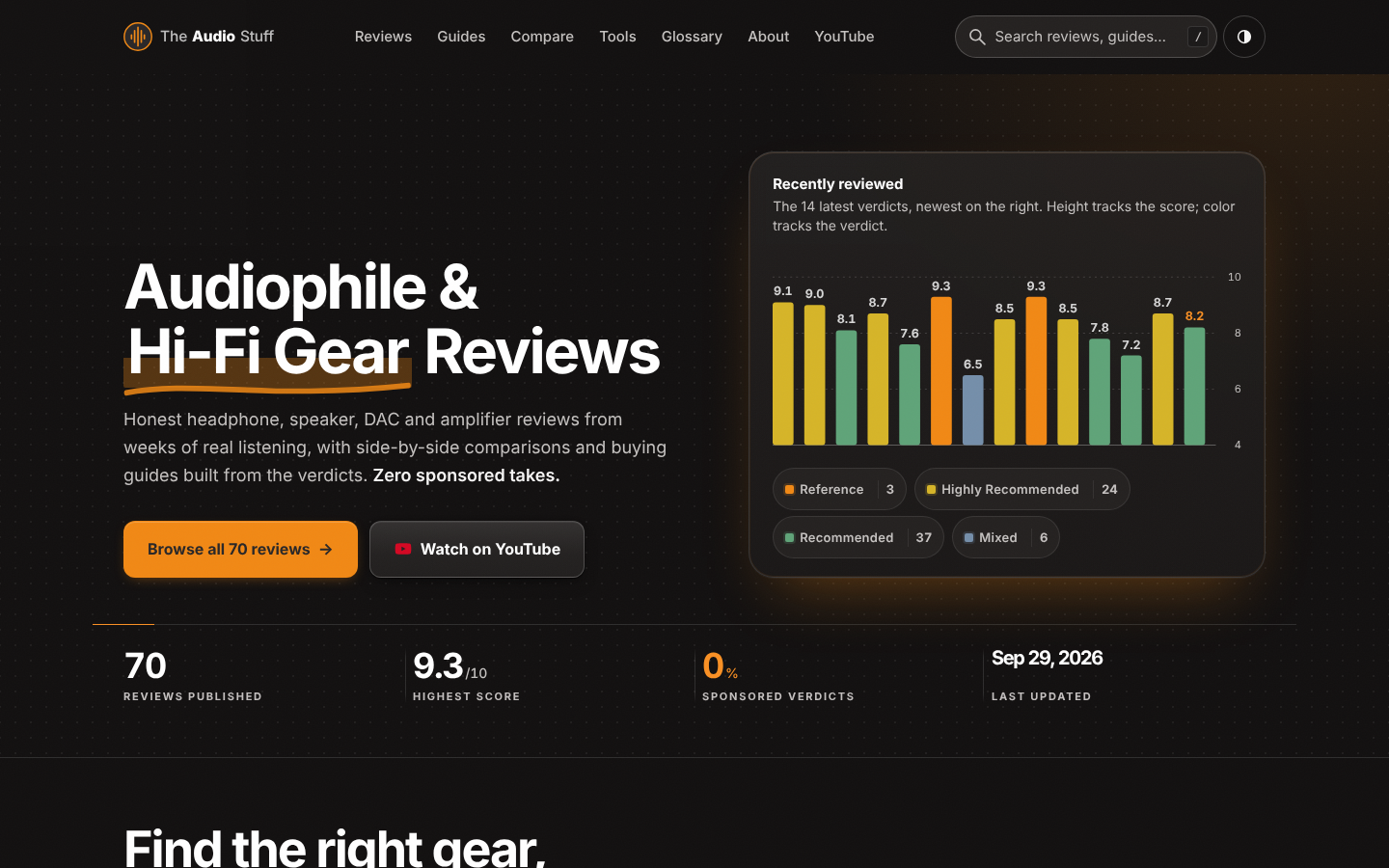
Find the right hi-fi gear for your ears, room and budget: ad-free reviews from weeks of listening, 12 buying guides, 35 comparisons and 17 free audio tools.

Get Face Report is an AI-powered facial analysis and personal styling platform that helps users understand their facial features

Antique Scanner reads hallmarks, maker's marks and wear in your photos — and returns an honest identification with age and value ranges.
