Ask what an AI video tool does and you usually get an answer about speed. Ask the same question about VidRush and the honest answer is about structure. VidRush does not market a single generation model with a nice interface. It simulates a production crew, and the interesting engineering question is how the VidRush roles divide the work and how their output stays editable after it lands on the timeline.
This deep dive looks at the internals that VidRush exposes in its own documentation of itself: the five-role crew, the channel-matching step, the approval gate, and the non-destructive timeline. These four features are where VidRush either works or does not.
VidRush names five internal roles: researcher, scriptwriter, motion designer, editor, and sound designer. Each owns a layer of the final video. The VidRush researcher gathers the factual material. The scriptwriter converts it into narration. The editor matches footage to the beats of that narration. The motion designer builds the animated explanations where no footage exists. The sound designer keeps the music bed coherent.
The significant word in the VidRush description is parallel. The five roles work against the same brief at the same time rather than queuing, and their outputs converge on one timeline. In a human studio, parallelism is a scheduling problem. Inside VidRush it is a design property, and it is the reason a first draft can exist in under an hour.
Compare that with the alternative shape of pipeline, where each stage must finish before the next begins. Sequential generation compounds errors: a weak script poisons the edit, and rework at the end is expensive. Parallel roles against one shared brief let VidRush surface inconsistencies early, while the script is still text.
The second VidRush feature is quieter but does more work. Before generating, VidRush studies the target channel: its pacing, its motion style, its editing rhythm. The V1 draft is then produced in that register rather than in a generic house style.
This matters for a practical reason. A documentary audience and a listicle audience have different tolerance for cuts, and a mismatch reads as a channel changing personality overnight. By absorbing the existing rhythm, VidRush produces a draft that fits the catalog it will live in, which reduces the revision distance between V1 and publish.
It also changes what the VidRush editor role is doing. Footage selection in VidRush is not a match on keywords alone; it is a match filtered through the pacing profile of the channel. The same brief sent to two different channels would plausibly produce two different cuts.
The third VidRush feature is the one that decides trust. Before VidRush renders anything, it presents the script, the planned footage choices, the voice, the style settings, and a cost estimate. Nothing is produced until you approve. The gate inverts the usual failure mode of generation tools, where the first render is also the first feedback.
The cost line deserves its own sentence. VidRush prices finished video from $2.18 per minute, plans start at $99 a month, and the rate drops below $2 at scale. Because the estimate sits beside the script at approval time, length is a budget decision made with the script in view, not an invoice discovered afterward.
Approval in VidRush also covers footage provenance. VidRush offers three sourcing modes: public domain and Creative Commons only, commercial stock, or general web crawling. A channel with licensing exposure can pin the tool to the first mode. That constraint lives at the same gate as everything else, so policy and cost and script are reviewed as one decision.
The fourth VidRush feature is the one that keeps the gate honest over time. After the V1 draft renders, VidRush offers two revision paths: plain-language chat instructions, or a manual timeline editor. Both are non-destructive. Cutting, replacing, or retiming a clip does not regenerate the rest of the video.
This is a bigger statement than it sounds. Generation pipelines usually regenerate whole outputs, which makes every revision a fresh roll of the dice on the parts you already liked. A non-destructive timeline in VidRush means an approved segment stays approved. The unit of rework shrinks from the video to the clip.
It also changes the economics of polish. If a two-second transition is clumsy, you fix two seconds. You do not pay, in minutes and in review attention, for the privilege of changing a detail. Over a six-to-sixty-minute runtime, that difference compounds into either a finished video or a folder of abandoned drafts.
Two kinds of evidence close a deep dive. The first is volume: VidRush reports 100K+ creators, 40,000+ videos produced, and 3 billion long-form views across the catalog it has built, numbers that say the VidRush pipeline has run hot rather than existing only in demos. Volume matters for a feature like channel-matching, because the VidRush pacing and motion profiles get sharper with every channel it studies.
The second is candor. The roadmap is dated in public: an enterprise offering named Atlas, aimed at newsrooms and rights holders repurposing licensed archives, is labeled coming soon, which lets a VidRush buyer price what exists today rather than what has been promised. The operator behind the service is named too, VidRush AI Studios LLP, and the scope limits are stated on the landing page instead of in a footnote.
Read together, the scale and the edges say one thing: VidRush knows which job it is for, and says so in the same place it sells.
None of these four features is individually exotic. The unusual part is that VidRush ships all four together, aimed at one format: the researched, narrated, long-form video of six to sixty minutes. Vlogs, gaming, and vertical Shorts are explicitly out of scope, and the narration is English today.
For documentary, finance, true crime, science, geopolitics, and explainer channels, the stack reads coherently: VidRush matches the channel, gates the expensive decisions, renders in parallel, and keeps the timeline editable. The five roles inside VidRush are the selling point precisely because they are separable, reviewable, and fixable, which is what a crew is for.
Flying Roadster AI Video Generator uses car references and optional portraits to make a defined flight sequence, with selectable resolution, framing, credits.

Project Moon Life is a browser simulation where a resident’s health, sanity, resources, and relationships shift as each decision changes the next year.
Premium undetected game modifications, HWID spoofers, and free gaming tools designed for seamless performance, maximum stability, and account safety.
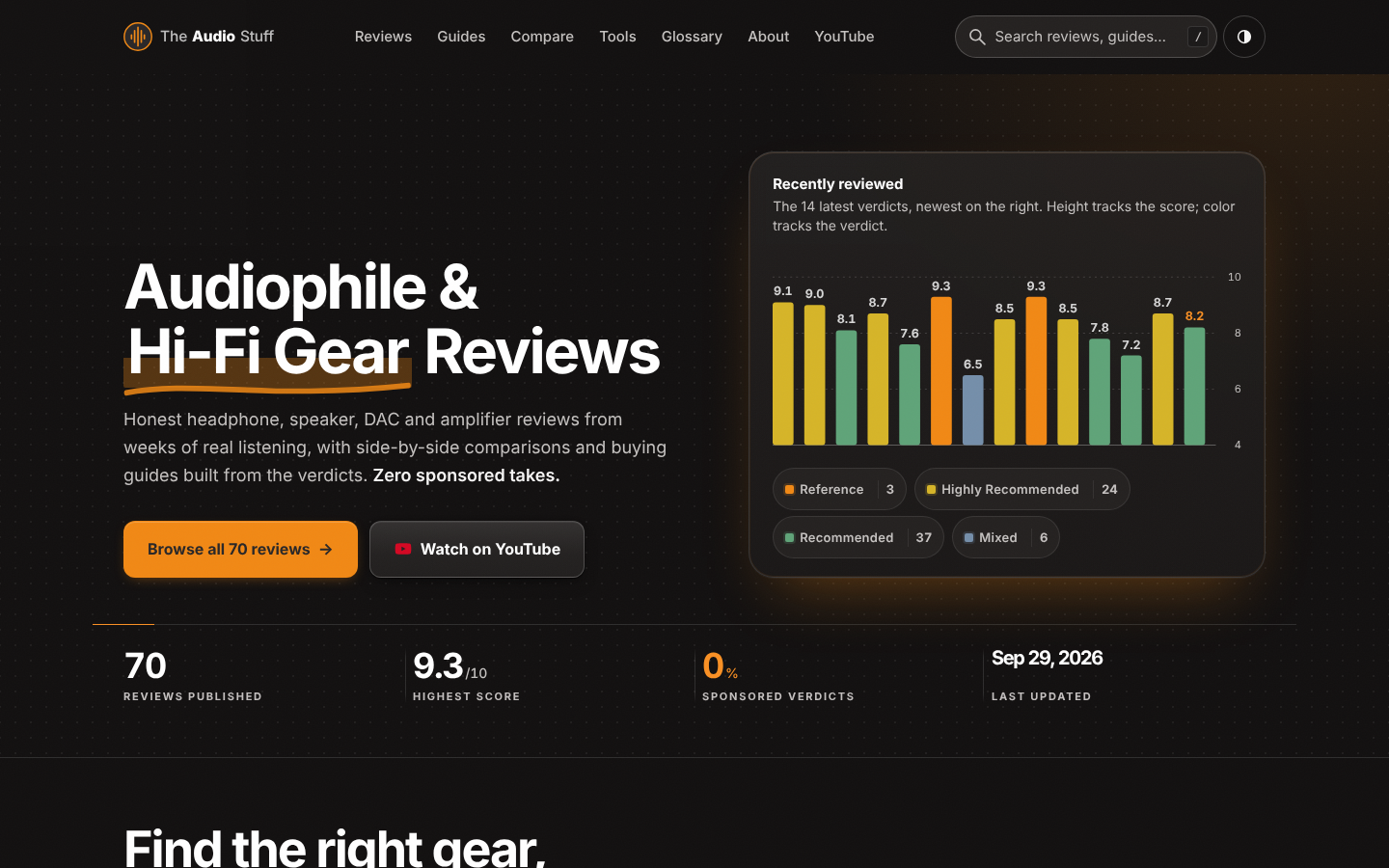
Find the right hi-fi gear for your ears, room and budget: ad-free reviews from weeks of listening, 12 buying guides, 35 comparisons and 17 free audio tools.

Get Face Report is an AI-powered facial analysis and personal styling platform that helps users understand their facial features

Antique Scanner reads hallmarks, maker's marks and wear in your photos — and returns an honest identification with age and value ranges.
